
Range Rover Coolant Leaks: Causes, Signs, and Repair
Range Rover coolant leaks are common, and they should never be ignored. Even a small leak can become a serious problem. Over time, low coolant can cause overheating and expensive engine damage.
At European Import Service, we regularly diagnose coolant leaks on Range Rover and Land Rover vehicles. Some leaks are easy to see. Others hide under the intake, behind engine covers, or deep inside the engine bay.
Because of that, a proper inspection matters. Simply adding coolant does not solve the problem.
Common Signs of Range Rover Coolant Leaks
A coolant leak does not always leave a puddle on the ground. In fact, many leaks start slowly. The coolant may evaporate before it ever drips onto the floor.
Look for these warning signs:
- Low coolant warning on the dashboard
- Coolant level dropping over time
- Sweet coolant smell after driving
- White or pink dried residue in the engine bay
- Steam coming from under the hood
- Rising engine temperature
- Wet spots under the vehicle
If your Range Rover needs coolant added more than once, there is a leak or another cooling system issue. The system should not normally lose coolant.
Why Range Rover Coolant Leaks Happen
Range Rover cooling systems use hoses, seals, reservoirs, plastic pipes, thermostats, and water pumps. These parts deal with constant heat and pressure.
As the vehicle ages, plastic parts can become brittle. Seals can shrink or harden. Hoses can weaken. As a result, coolant leaks may begin.
Below are some of the most common causes.
1. Water Pump Leaks
The water pump moves coolant through the engine and radiator. When its seal starts to fail, coolant may leak from the pump area.
Common symptoms include:
- Coolant smell
- Dried coolant residue
- Slow coolant loss
- Low coolant warning
- Overheating in more severe cases
However, water pump leaks are not always easy to spot. On some Range Rover engines, the pump sits in a tight area. Therefore, a quick visual check may not be enough.
2. Thermostat Housing Leaks
The thermostat helps control engine temperature. Its housing and seals can also leak with age.
A thermostat housing leak may cause:
- Coolant residue near the front or top of the engine
- Slow coolant loss
- A low coolant warning
- Temperature control problems
Sometimes the leak gets worse once the engine becomes hot. For that reason, testing the system under pressure can help confirm the source.
3. Plastic Coolant Pipes and Crossover Pipes
Plastic coolant pipes are a known concern on several Range Rover engines. These pipes handle high heat every time the engine runs. Eventually, the plastic can crack or seep.
These leaks can be tricky because they may:
- Hide under the intake manifold
- Leak only when the system is hot
- Leave dried coolant marks instead of wet spots
- Become worse very quickly
Because of this, coolant pipe leaks should be diagnosed carefully. Guessing can lead to unnecessary repairs.
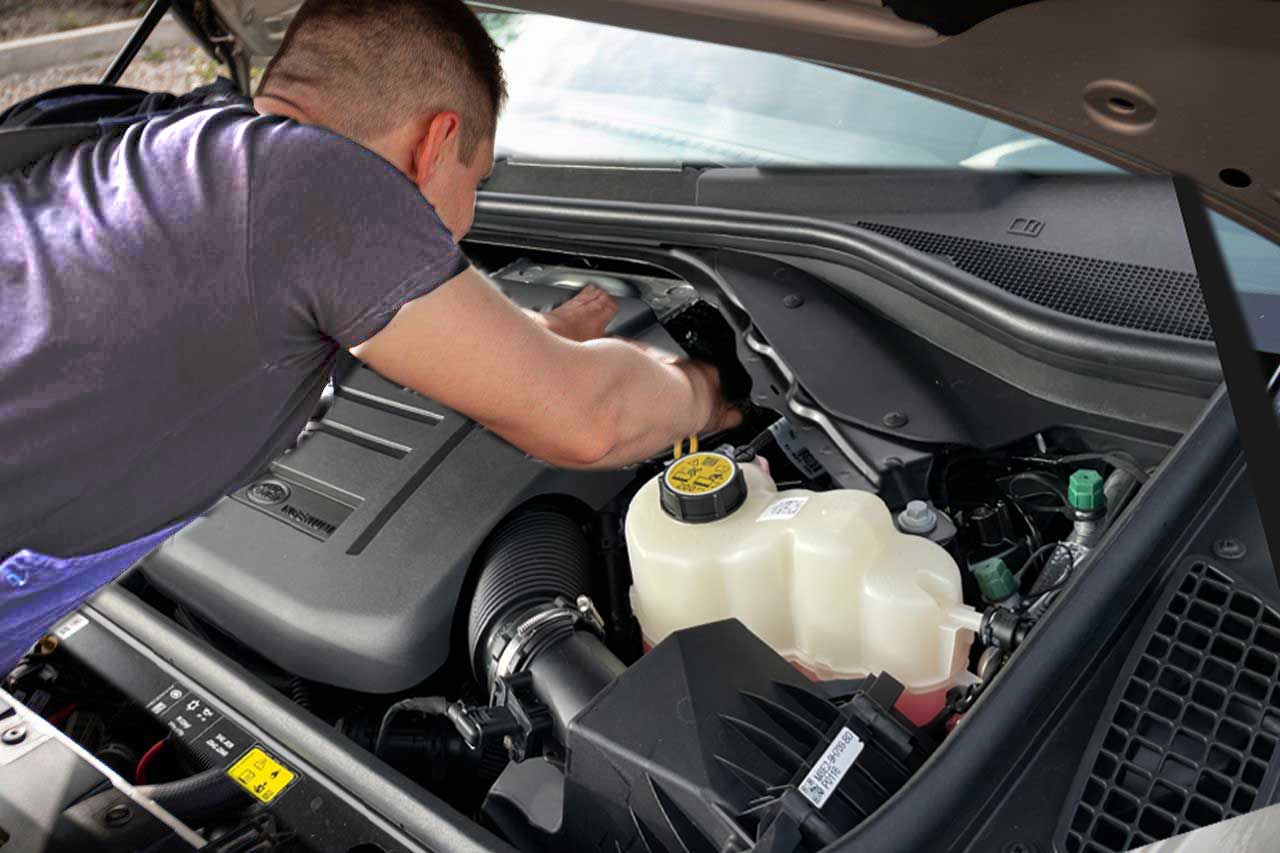
4. Coolant Reservoir and Cap Problems
The coolant reservoir, also called the expansion tank, stores coolant as pressure changes. Over time, the tank can crack. The cap can also lose its ability to hold pressure.
Signs of a reservoir or cap issue include:
- Coolant around the tank seams
- Wetness near the cap
- Cracks in the plastic reservoir
- Repeated low coolant warnings
A weak cap may seem minor. Still, it can allow coolant pressure to escape and make the problem harder to trace.
5. Radiator and Hose Leaks
Radiators and coolant hoses can also leak. Age, heat, and road debris can all play a role.
A leaking hose may show:
- Wetness near a clamp
- Swelling or soft spots
- Visible cracks
- Coolant dripping after a drive
Radiator leaks may show up near the corners or seams. However, some leaks are small and only appear under pressure.
Why Small Coolant Leaks Can Become Expensive
Small Range Rover coolant leaks often become bigger problems when drivers keep topping off the system. At first, the vehicle may seem fine. Then, one day, the coolant level drops too far.
If the engine overheats, repairs can become much more expensive. Severe overheating may damage gaskets, warped components, or other engine parts.
For that reason, it is best to diagnose coolant loss early. Finding the leak now is usually far cheaper than repairing an overheated engine later.
How We Diagnose Range Rover Coolant Leaks
At European Import Service, we focus on finding the exact cause before recommending parts. That approach helps avoid wasted time and unnecessary repairs.
Diagnosis may include:
- Visual inspection for wetness or dried coolant residue
- Cooling system pressure testing
- Checking the water pump and thermostat area
- Inspecting plastic coolant pipes
- Looking closely around hoses and reservoir seams
- Removing covers when needed to find hidden leaks
- Confirming whether the leak appears hot, cold, or under pressure
This process gives us a clearer answer. More importantly, it helps us repair the real problem.
Can You Drive With a Range Rover Coolant Leak?
It depends on how bad the leak is. However, it is never wise to ignore coolant loss.
You should stop driving and have the vehicle inspected if you notice:
- The temperature gauge rising
- Steam from under the hood
- Coolant pouring onto the ground
- A warning returning soon after topping off coolant
- A strong coolant smell after driving
Driving an overheating engine can turn a manageable leak into a major engine repair.
Range Rover Coolant Leak Repair in Costa Mesa
If your Range Rover is losing coolant, showing a low coolant warning, or giving off a sweet coolant smell, we can help.
At European Import Service, we provide diagnosis-first Range Rover repair for drivers in Costa Mesa, Newport Beach, Irvine, Huntington Beach, and surrounding Orange County areas.
Call us today or book an appointment online to have your Range Rover coolant leak inspected properly.